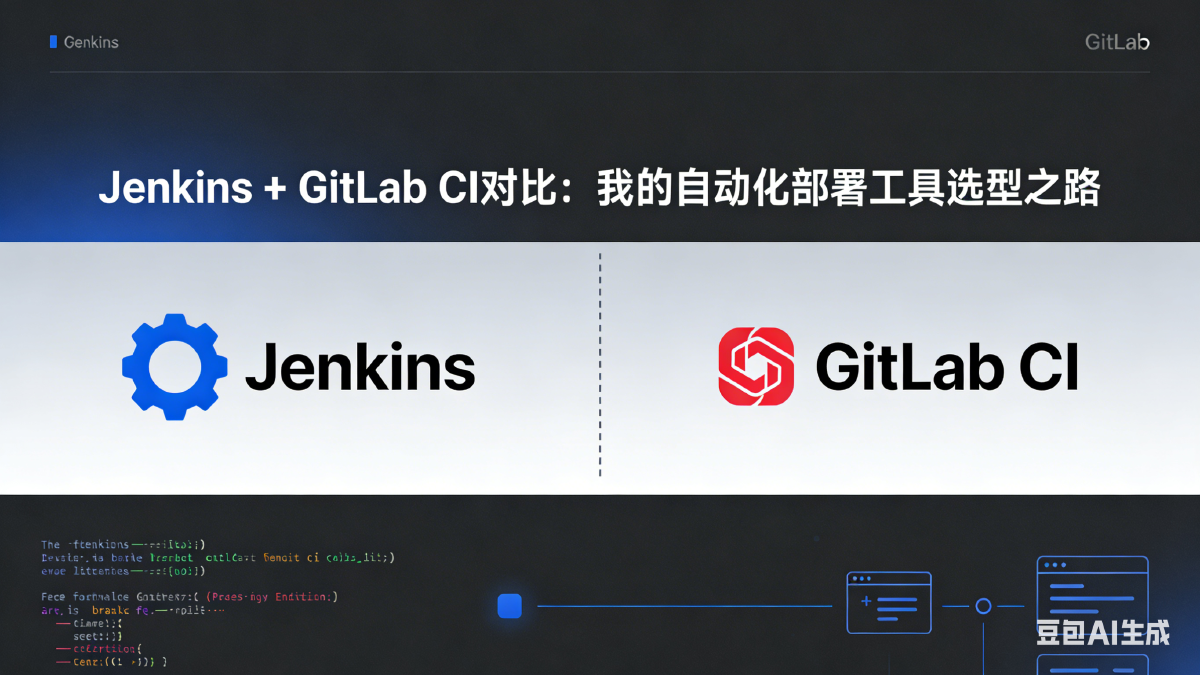

In DevOps practices, automated build and deployment are core processes. I have used both Jenkins and GitLab CI tools, encountered many pitfalls along the way, and today I will share the pros and cons of these two tools as well as my selection recommendations.
I. Jenkins: A Powerful Veteran Tool#
Advantages
- Rich plugin ecosystem: Supports integration with almost all mainstream programming languages and tools
- Visual configuration: Suitable for operation and maintenance personnel who are not familiar with scripting
- Distributed builds: Supports concurrent task execution across multiple nodes
Disadvantages
- Complex deployment: Requires separate maintenance of servers and plugin versions
- High resource consumption: Has certain requirements for server configurations
- Additional security configuration needed: Default permission management is relatively loose
II. GitLab CI: Seamless Integration with Code Repositories#
Advantages
- Zero-cost integration: Natively integrated with GitLab repositories, no additional deployment required
- Configuration as code: Pipeline management via
.gitlab-ci.ymlfile, supporting version control - Lightweight: Low resource consumption, suitable for small teams and personal projects
Disadvantages
- Relatively limited functionality: Third-party tools are required for complex scenarios
- Learning curve: Requires familiarity with YAML syntax and pipeline rules
III. My Selection Recommendations#
- Personal/small-scale projects: Prioritize GitLab CI for its simple configuration and low maintenance costs
- Enterprise-level complex scenarios: Choose Jenkins, whose plugin ecosystem can meet customized requirements
- Hybrid usage: Use GitLab CI for lightweight builds and Jenkins for complex deployment processes
Conclusion#
There is no one-size-fits-all best tool, only the most suitable one. Choosing based on project scale and team technology stack can maximize the value of CI/CD.